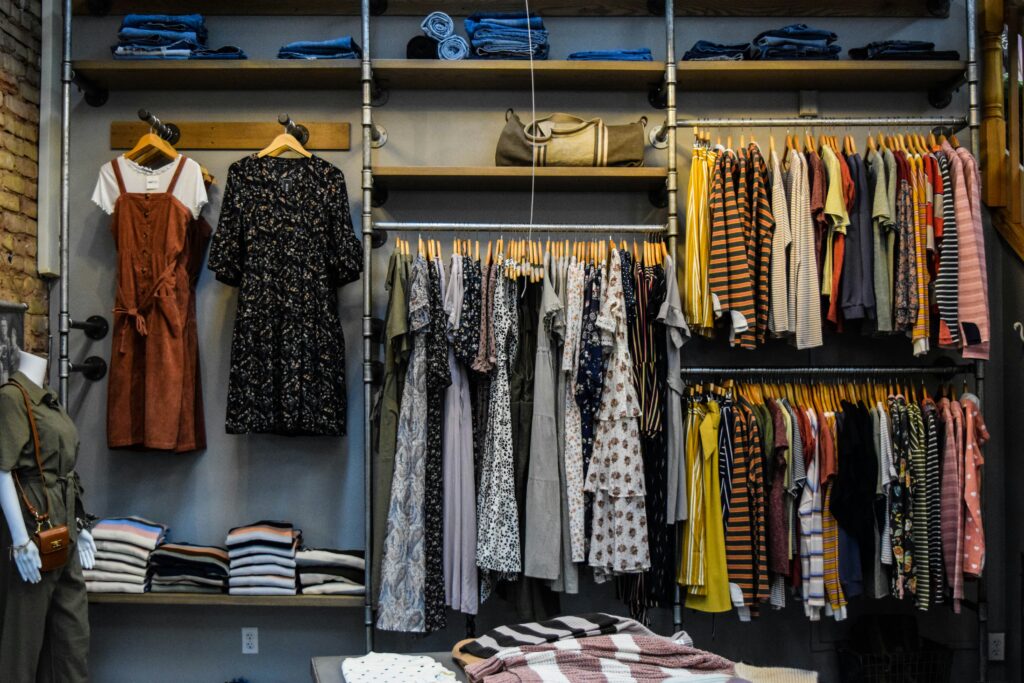
You open your closet.
It’s full of clothes.
And somehow, you still feel like you have nothing to wear.
Sound familiar?
The natural reaction is usually to start shopping. A new sweater here, another pair of jeans there, maybe a handbag that promises to magically make everything else in your closet more exciting.
A few weeks later, you’ve spent $200—and you’re standing in front of the same closet having exactly the same problem.
Here’s the good news:
You probably don’t need an entirely new wardrobe.
Often, what your closet really needs is a reset.
By reorganizing what you own, creating new outfit combinations, adding a few carefully chosen accessories, and shopping strategically, you can make your existing wardrobe feel surprisingly fresh without spending a fortune.
If you’re wondering how to refresh your wardrobe on a budget, start with these 12 practical ideas.
1. Shop Your Closet Before You Shop the Stores
Before spending a dollar, go shopping.
In your own closet.
Take everything out—or at least work through your wardrobe section by section.
You may be surprised by what you find hiding behind the pieces you wear every week.
That blouse you forgot about.
A cardigan you haven’t worn since last winter.
A dress that looks completely different with boots instead of sandals.
A handbag that hasn’t left its dust bag in two years.
Create three groups:
LOVE & WEAR
KEEP & RESTYLE
LET GO
The middle category is where things get interesting.
These are clothes you don’t necessarily dislike—you simply don’t know how to wear them anymore.
Instead of immediately replacing them, challenge yourself to create two or three new outfits with each piece.
You may discover that your closet has much more potential than you thought.
2. Identify Your Wardrobe Gaps
One of the biggest reasons we waste money on clothing is that we shop without knowing what we actually need.
You don’t need another random cute top.
You need the piece that makes five things you already own easier to wear.
After organizing your closet, write down what’s genuinely missing.
Maybe it’s:
- A neutral cardigan
- A good white shirt
- A versatile belt
- Comfortable everyday shoes
- Straight-leg jeans
- A lightweight jacket
- A simple black dress
Now you have a shopping list.
That changes the question from:
“What do I want to buy?”
to:
“What would make my existing wardrobe work better?”
That small shift can save a surprising amount of money.
3. Change Your Accessories First
Want the quickest and cheapest wardrobe refresh?
Don’t start with clothes.
Start with accessories.
A simple outfit like jeans and a white shirt can look completely different depending on what you add.
Try:
A statement necklace
A colorful scarf
A structured handbag
A leather or faux-leather belt
Gold-tone or silver-tone earrings
A patterned tote
A baseball cap
A pair of sunglasses
Accessories allow you to experiment with trends without investing in an entirely new outfit.
They’re also particularly useful when transitioning between seasons.
A summer dress can suddenly feel appropriate for early fall when paired with boots, a belt, and a cardigan.
Budget style tip: If you only have $50 to refresh your wardrobe, accessories may give you more outfit possibilities than buying one new dress.
4. Try the 3-Outfit Rule Before Buying Anything
Here’s a simple shopping rule that can prevent a lot of wardrobe mistakes:
Before buying a new item, imagine at least three outfits you can create with clothes you already own.
Thinking about buying a blazer?
Can you wear it with:
Jeans + T-shirt?
Dress + boots?
Trousers + blouse?
Yes?
Good candidate.
But if that beautiful patterned skirt only works with a blouse, shoes, and jacket you haven’t bought yet, the $35 skirt isn’t really a $35 purchase.
It’s the beginning of a much more expensive outfit.
The most valuable clothes in your wardrobe aren’t always the most exciting pieces.
They’re the ones you can wear repeatedly in different ways.
5. Give Your Basics a Makeover
Basics can sometimes feel boring.
But they’re also the easiest clothes to transform.
Take a simple:
White shirt
Black T-shirt
Neutral sweater
Straight-leg jeans
Black pants
Simple dress
and style it differently.
Roll the sleeves.
Tuck in the front.
Add a belt.
Layer a shirt under a sweater.
Wear a blazer over a T-shirt.
Tie a scarf around your neck—or your handbag.
Add statement earrings.
Swap sneakers for loafers or ankle boots.
Sometimes what feels like a wardrobe problem is actually a styling problem.
Before replacing your basics, see whether you can wear them differently.
6. Create a Personal Color Palette
A closet becomes much easier to use when the colors work together.
This doesn’t mean you have to wear beige for the rest of your life.
Instead, identify a few core neutral colors you wear frequently.
For example:
Black + cream + camel + denim
Then choose two or three accent colors you love.
Perhaps:
Burgundy + forest green + dusty rose
Suddenly, shopping becomes easier.
Instead of buying random pieces because they’re attractive individually, you start asking:
“Does this work with the colors already in my wardrobe?”
The more your clothes coordinate, the more outfits you can create with fewer pieces.
That’s one of the basic principles behind a capsule wardrobe—and it’s extremely useful when you’re trying to dress well on a budget.
7. Use Layers to Create New Outfits
Layering is one of the easiest ways to make old clothes feel new.
A dress you wore throughout summer doesn’t necessarily need to disappear when fall arrives.
Try adding:
A cardigan
A denim jacket
A blazer
A lightweight sweater
A button-down shirt
A scarf
The same applies to shirts and T-shirts.
Wear a white shirt open over a tank top.
Layer it under a sweater.
Add a blazer.
Tie it at the waist over a dress.
One item suddenly becomes four outfits.
This is particularly useful when building a seasonal wardrobe on a budget, because you’re extending the life of clothes you already own instead of replacing them every few months.
8. Try a Clothing Swap with Friends
Want new clothes for almost nothing?
Trade.
Organize a simple clothing swap with a few friends.
Everyone brings clean, good-condition clothing and accessories they no longer wear.
Then shop each other’s collections.
You might arrive with a dress that’s been sitting untouched in your closet for two years and leave with a jacket you’ll wear every week.
It costs almost nothing.
It keeps usable clothes in circulation.
And it’s much more fun than spending Saturday afternoon scrolling through online stores.
Add snacks and drinks and turn it into a low-cost girls’ night.
9. Discover Secondhand Shopping
If you’re trying to refresh your wardrobe for less, thrift and secondhand shopping can be incredibly useful.
But don’t walk into a thrift store and buy things simply because they’re cheap.
A bargain you never wear is still wasted money.
Use the same strategy you’d use in any other store.
Bring your wardrobe gap list.
Look for:
Blazers
Denim
Button-down shirts
Leather belts
Handbags
Coats
Quality knitwear
Check fabric, seams, buttons, zippers, stains, and overall condition before buying.
And don’t become too attached to the size on the label.
Sizing varies enormously between brands and decades.
Shop for fit, not the number.
10. Repair and Alter Clothes You Already Own
Sometimes an item isn’t wrong.
The fit is.
A dress may be slightly too long.
A blazer may need a button replaced.
Jeans may need hemming.
A shirt might look better with a small alteration.
Before donating an otherwise good-quality piece, ask whether a simple repair or alteration would make you wear it again.
Basic repairs can also be done at home.
Learn how to:
Sew on a button.
Fix a loose hem.
Remove fabric pills from sweaters.
Steam wrinkled clothes.
Polish shoes.
Clean handbags properly.
Clothing that looks tired often isn’t actually worn out.
It just needs a little maintenance.
11. Use the One-In, One-Out Rule
Once you’ve cleaned and reorganized your closet, protect your progress.
For every new clothing item you bring home, consider removing one you no longer wear.
Bought new jeans?
Take another look at the jeans already in your closet.
Bought a handbag?
Is there an old one you never use?
The goal isn’t to follow an extreme minimalist rule.
It’s simply to prevent your wardrobe from slowly returning to the same overcrowded state.
A closet with fewer clothes you genuinely enjoy wearing can feel much more luxurious than a closet packed with impulse purchases.
12. Set Yourself a Wardrobe Refresh Budget
You don’t have to stop shopping completely.
Give yourself a limit.
For example:
The $50 Wardrobe Refresh Challenge
Your goal is to make your wardrobe feel different without spending more than $50.
You could choose:
Option A
Statement scarf — $12
Belt — $15
Earrings — $10
Secondhand blouse — $13
Total: $50
Or:
Option B
Secondhand blazer — $25
Simple T-shirt — $10
Statement earrings — $15
Total: $50
The exact prices will vary, of course.
The important part is having a limit before you start shopping.
When there’s no budget, every purchase gets evaluated individually:
“It’s only $20.”
“It’s only $15.”
“It’s only $30.”
And suddenly you’ve spent $150.
A fixed budget forces you to decide which purchases will make the biggest difference.
Try the 10 × 10 Wardrobe Challenge
Before deciding you need more clothes, try this experiment.
Choose 10 items from your wardrobe and create 10 different outfits.
Don’t count accessories.
For example:
2 pairs of pants
1 pair of jeans
2 tops
1 shirt
1 sweater
1 cardigan
1 blazer
1 dress
Then mix and match.
Photograph every outfit you like.
You’ll start creating your own personal outfit library.
The next time you’re standing in front of your closet saying:
“I have nothing to wear.”
Open your photos.
Problem solved.
How to Make Cheap Clothes Look More Expensive
You don’t need designer clothing to look polished.
Often, the difference comes down to presentation.
Prioritize fit
A $30 blazer that fits beautifully can look better than a $300 blazer that doesn’t.
Steam your clothes
Wrinkles can make even expensive clothing look neglected.
Take care of your shoes
Clean shoes instantly make an outfit look more intentional.
Choose simple combinations
Too many competing colors, patterns, and accessories can make an outfit feel chaotic.
Pay attention to fabric condition
Remove lint and pilling and avoid visibly worn-out pieces.
Use accessories intentionally
One beautiful-looking accessory often works better than five competing ones.
Style isn’t about showing how much you spent.
It’s about making everything look intentional.
What NOT to Buy When Refreshing Your Wardrobe
Saving money isn’t only about finding bargains.
It’s also about avoiding bad purchases.
Be careful with:
Clothes that “will fit when…”
Buy for the body you dress today.
Extreme trends
If you genuinely love a trend, enjoy it—but consider trying it through a lower-cost accessory first.
Uncomfortable shoes
If they hurt in the store, they’re unlikely to become your favorite shoes at home.
Clothes that require an entirely new outfit
Remember the 3-Outfit Rule.
Duplicates
How many nearly identical black sweaters do you actually need?
Sale items you wouldn’t buy at full price
A 60% discount doesn’t turn something you don’t need into a smart purchase.
Sometimes the cheapest wardrobe refresh is simply not buying the wrong thing.
You Don’t Need More Clothes—You Need More Outfits
There’s an important difference between owning clothes and having outfits.
A closet can contain 100 individual pieces that don’t work together.
Another can contain 40 carefully chosen pieces that create dozens of combinations.
The second wardrobe will often feel bigger.
That’s why refreshing your wardrobe on a budget should begin with styling rather than shopping.
Rediscover what you own.
Identify what’s missing.
Create new combinations.
Add accessories.
Repair good pieces.
Try secondhand shopping.
Then, and only then, buy the few things that make the rest of your wardrobe work harder.
You may discover that you don’t need a completely new wardrobe at all.
You simply needed to see your old one differently.